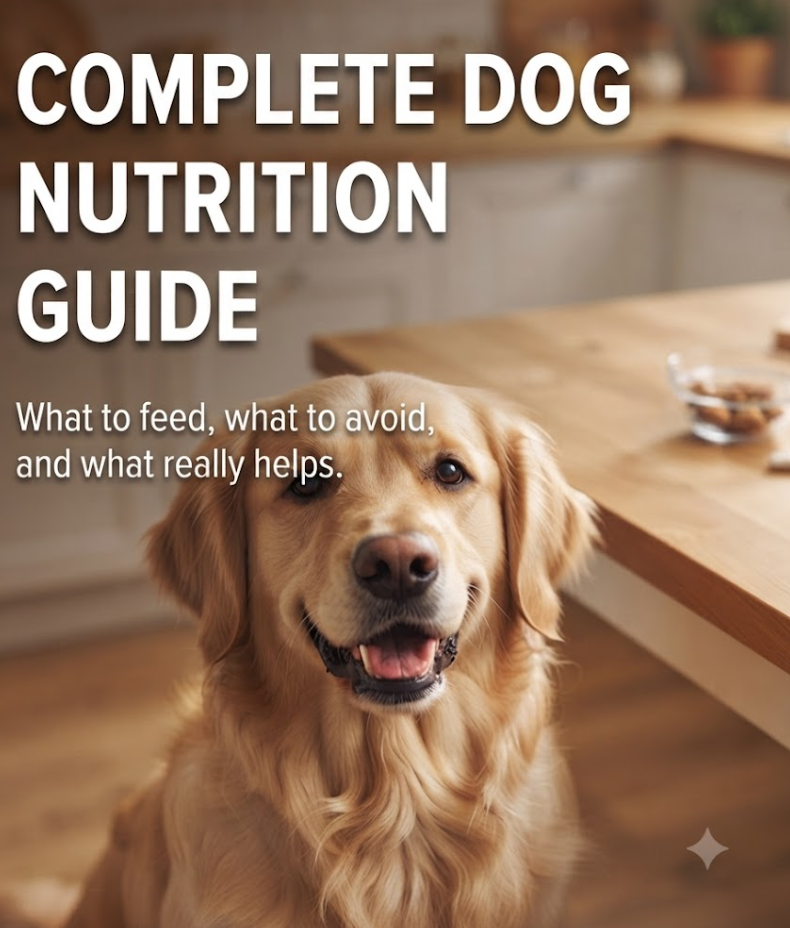
🍖 The Complete Dog Nutrition Guide: What to Feed, What to Avoid, and What Actually Helps
Life-stage feeding, homemade treat recipes, supplements worth trying, and the toxic food list every owner needs.
“Can dogs eat this?” is one of the most-searched questions by dog owners — and for good reason. Nutrition affects everything from energy levels to lifespan, and one wrong bite of the wrong food can turn into an emergency vet visit. This guide covers exactly what to feed at every life stage, how to make safe homemade treats, which supplements are worth considering, and a complete list of foods to never give your dog.
⚠️ Before anything else: This article is for general education, not a substitute for veterinary advice. Every dog’s needs vary by breed, weight, health condition, and activity level — always confirm major diet changes with your vet.
🗂️ What’s Covered
| 1 | Feeding by Life Stage |
| 2 | Feeding by Breed Size |
| 3 | Easy, Safe Homemade Treat Recipes |
| 4 | Supplements Worth Considering |
| 5 | Complete Toxic Food List |
| 6 | What To Do If Your Dog Eats Something Toxic |
1️⃣ Feeding by Life Stage
A puppy, an adult, and a senior dog have completely different nutritional needs. Feeding the wrong formula for too long can contribute to obesity, joint problems, or poor growth.
| Life Stage | Feeding Frequency | Nutritional Priorities |
|---|---|---|
| Puppy (0–12 months) | 3–4 small meals/day, tapering to 2 by 6 months | Higher protein and fat for growth; DHA for brain development; look for “puppy” or “growth” labeled food, AAFCO-approved |
| Adult (1–7 years) | 2 meals/day | Balanced protein/fat/carb ratio matched to activity level; weight maintenance is the main goal |
| Senior (7+ years, varies by breed size) | 2 smaller meals/day | Lower calorie density to prevent weight gain as metabolism slows; joint-support nutrients (glucosamine, omega-3s); easier-to-digest protein |
⭐ Key tip: Large-breed puppies (think Labradors, Great Danes) need growth-controlled formulas specifically — feeding standard high-calorie puppy food can cause them to grow too fast, straining developing joints.
2️⃣ Feeding by Breed Size
| Breed Size | Examples | Feeding Notes |
|---|---|---|
| Small (under 20 lbs) | Chihuahua, Yorkie, Dachshund | Faster metabolism — often need smaller, more frequent meals; smaller kibble size for their jaws |
| Medium (20–50 lbs) | Beagle, Border Collie, Bulldog | Standard adult formulas work well; watch calorie intake if less active breeds |
| Large (50–90 lbs) | Labrador, German Shepherd, Golden Retriever | Joint-support ingredients recommended; prone to bloat — split meals rather than one large feeding |
| Giant (90+ lbs) | Great Dane, Mastiff, Saint Bernard | Slower growth formulas as puppies; controlled calcium/phosphorus ratio; raised feeders can reduce bloat risk (ask your vet) |
3️⃣ Easy, Safe Homemade Treat Recipes
Treats should never exceed 10% of a dog’s daily calories. These simple recipes use dog-safe ingredients and require minimal prep.
🥕 Frozen Peanut Butter & Banana Bites
- 1 ripe banana, mashed
- 2 tbsp plain, unsweetened, xylitol-free peanut butter (always check the label)
- 1/2 cup plain Greek yogurt (unsweetened, no xylitol)
Mix everything together, spoon into a silicone ice cube tray, and freeze for at least 3 hours. Great for hot days or teething puppies.
🍗 Baked Chicken & Sweet Potato Chews
- 1 boneless, skinless chicken breast, thinly sliced
- 1 large sweet potato, thinly sliced (skin removed)
Lay slices on a parchment-lined baking sheet, bake at 250°F (120°C) for 2–3 hours until dried and chewy. No oil, salt, or seasoning needed — dogs don’t need the extra sodium.
🎃 Pumpkin Oat Training Treats
- 1 cup canned pure pumpkin (not pumpkin pie filling)
- 2 cups rolled oats
- 2 eggs
Mix into a dough, roll thin, cut into small pieces, and bake at 350°F (175°C) for 20 minutes. Pumpkin is also great for dogs with mild digestive upset.
⭐ Key tip: Always double-check peanut butter labels before using it in any recipe — some brands now contain xylitol, which is extremely toxic to dogs even in tiny amounts.
4️⃣ Supplements Worth Considering
| Supplement | Commonly Used For | Notes |
|---|---|---|
| Omega-3 fish oil | Skin/coat health, joint inflammation, cognitive support | One of the most broadly recommended supplements; dosage should be weight-based |
| Glucosamine & chondroitin | Joint support, especially for seniors and large breeds | Most useful started before arthritis symptoms appear, not after |
| Probiotics | Digestive health, especially after antibiotics or diet changes | Look for canine-specific strains rather than human probiotics |
| Multivitamins | General nutritional gaps, especially on homemade diets | Usually unnecessary for dogs already on a complete, balanced commercial diet |
⚠️ Important: Supplements aren’t regulated as strictly as pet food. Choose brands that publish third-party testing results, and always run new supplements by your vet — especially if your dog is on any medication.
5️⃣ Complete Toxic Food List
These foods can cause serious illness or death in dogs. Some are dangerous in tiny amounts, so “just a little” is never safe.
| Food | Why It’s Dangerous | Symptoms |
|---|---|---|
| Grapes, raisins, currants | Can cause acute kidney failure; no known safe amount, no identified toxic compound | Vomiting, lethargy, decreased urination within 12–24 hrs |
| Chocolate & cocoa | Contains theobromine and caffeine, which dogs can’t metabolize well; darker/baking chocolate is most dangerous | Vomiting, rapid heart rate, tremors, seizures |
| Xylitol (sugar-free gum, some peanut butter, “diet” products) | Triggers a massive insulin spike, crashing blood sugar within 30–60 minutes; can also cause liver failure | Weakness, collapse, seizures |
| Onions, garlic, leeks, chives | Damages red blood cells; dangerous raw, cooked, or powdered (soups, gravies, baby food) | Weakness, pale gums, rapid breathing |
| Macadamia nuts | Toxic mechanism still unknown; even 2–3 nuts can cause reactions | Weakness, vomiting, tremors, fever, usually within 12 hrs |
| Alcohol & raw bread dough | Dogs have zero alcohol tolerance; rising dough ferments in the stomach, producing alcohol and gas | Vomiting, disorientation, bloating, potential coma |
| Caffeine (coffee, tea, energy drinks) | Similar mechanism to chocolate toxicity, affects heart and nervous system | Restlessness, rapid heart rate, tremors |
| Avocado | Contains persin, which can cause GI upset; the pit is also a choking/blockage hazard | Vomiting, diarrhea |
| Cooked bones | Can splinter and cause choking or internal punctures — different from raw bones | Choking, vomiting, bloody stool |
| Xylitol-containing gum/candy | Same danger as xylitol above — check labels on “sugar-free” products carefully | See xylitol symptoms above |
🚨 Zero-tolerance rule: Grapes, raisins, chocolate, and xylitol have no “safe small amount.” If your dog eats any of these, treat it as an emergency regardless of the quantity.
6️⃣ What To Do If Your Dog Eats Something Toxic
- Don’t wait for symptoms. By the time symptoms appear, the toxin may already be absorbed — call for help immediately.
- Don’t induce vomiting at home unless a vet or poison control specifically tells you to — it can make some situations worse.
- Call one of the numbers below and be ready to describe what your dog ate, roughly how much, and when.
- Bring the packaging (or a photo of the ingredient label) to the vet if possible — it speeds up treatment.
| Resource | Contact |
|---|---|
| ASPCA Animal Poison Control | 1-888-426-4435 (24/7) |
| Pet Poison Helpline | 1-855-764-7661 (24/7, consult fee applies) |
| Your regular vet or nearest emergency animal hospital | Save this number in your phone now, before you need it |
🎯 The Bottom Line
Good nutrition isn’t complicated — feed a complete, life-stage-appropriate diet, keep treats to 10% of daily calories, introduce supplements thoughtfully, and keep the toxic food list somewhere visible in your kitchen. The single biggest thing you can do for your dog’s health today is simply knowing what NOT to feed them.
This article is for general educational purposes and is not a substitute for individualized veterinary advice. Always consult your veterinarian about your dog’s specific diet, weight, and health needs.



댓글 남기기